


Greetings,
I hope you’re well and having a good summer.
It has been a while, but then again, what a while it has been.
When I last wrote a wtf newsletter, it was uncertain what kind of season 2025/26 was going to end up being for Aston Villa. In the end, while the start of 2026 was patchy, after a strong finish, Aston Villa arguably had their best season since the club’s early eighties glory years. The Europa League has to be seen as bigger than the Coca Cola Cup, and even 2nd and 4th finishes in the early years of the Premier League were only worth UEFA Cup qualification.
Villa also had five players involved in this summer’s World Cup semi-finals and there’s a Super Cup match-up with PSG next month on the horizon. Life is very good indeed at the moment as a Villa fan.
It’s good timing, considering it’s the 15th anniversary of My Old Man Said (MOMS) too, which, in contrast, started in the dark days of Alex McLeish taking the reins at Villa Park.
This anniversary has triggered a refocus, which includes rebooting astonvilla.wtf, which only went quiet due to the limited time available for a one-man band to produce and run the MOMS podcast, the website, MOMS membership, and all the social media. Good progress has been made this summer in terms of sorting things out, so everything can run in a more orderly manner.
I’ve got a lot of Villa insights that have been sitting on ice, but they will be shared in the coming weeks in the AVWTF newsletter, which you’ll receive on Friday of every week.
So, let’s begin.
UTV
David
Emery 2.0 Begins

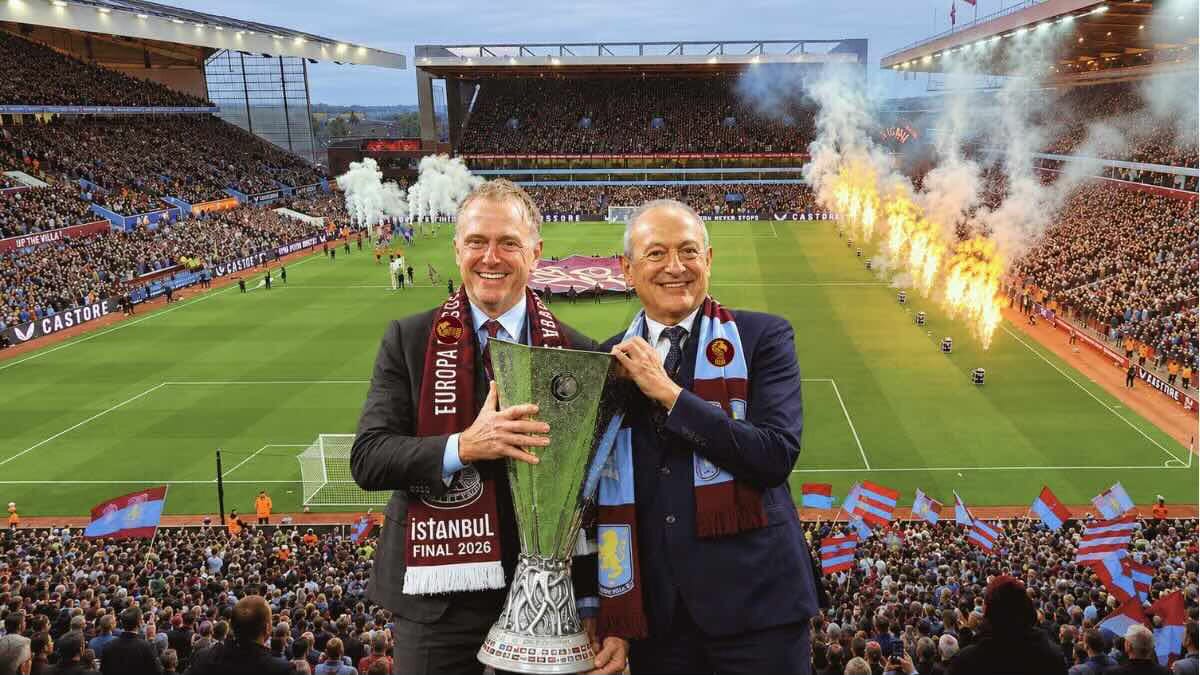
Lifting the Europa League in May was a great crescendo for the first iteration of Unai Emery’s Villa team, that had been regulars in European competitions. With most of the team bought under previous Villa managers, as far back as Steve Bruce, when you consider John McGinn, Emery’s team always had a second-hand feel about it. It also wasn’t getting any younger either: from the minutes played last season, Villa had the second-oldest average squad age in the league, after Fulham.
Then there was a factor nobody has really talked about: with another Champions League campaign on the horizon, the squad needed to get better. It had been fine for Europa League level, but Emery’s ambition, and the owner’s, had always been to compete in the Champions League, and without the X-factor likes of Jhon Duran, Marco Asensio and Marcus Rashford, Villa were arguably weaker than the team that got to the quarter-finals of the Champions League.
Villa faced a problem heading into the summer transfer window, though. They were shackled by a settlement with UEFA in view of breaches of their Squad Cost Ratio and Financial Sustainability Regulations.
Without wanting to revisit the specifics here, suffice to say, it meant that unless they made decent profit on sales in this summer’s transfer window, they would have their hands severely tied in the market.
So, the golden goose of Morgan Rogers has been sold for £117m, Youri Tielemans went for £35m and Lucas Digne left on a €10m release clause. Add to that a long-term injury to Amadou Onana, and Villa are suddenly missing five players from their starting XI against PSG at Villa Park, with only McGinn and the returning Boubacar Kamara left from the midfield and attack.
So far in the summer, Villa have addressed the age profile of the squad, with the likes of Johan Manzambi (20), João Gomes (25), and Alejandro Garnacho, who only turned 22 this month. Forward Brian Madjo (17), who Villa paid £10m to FC Metz for last season, will be a match squad member in January 2027 at the latest, when he turns 18, unless Villa fast-tracks him, if their appeal is successful against FIFA’s registration rules.
With several weeks of the window still to go, it’s too early to judge the level of Villa’s squad. But if they lose another member of that starting XI against PSG, it’s hard not to think Villa are heading into a genuine transition season in the middle of a Champions League campaign.
There’s a real concern in that. But the player sales were needed to address a UEFA straitjacket Villa weren’t entirely blameless for getting into, and Emery has used it to finally shed the second-oldest squad in the league for a younger one.
While the reboot may not be a comfortable one for everyone, it’s one that Villa needed to jolt themselves into a mindset to achieve more, rather than fall into the same hubris that undid both West Ham and Spurs recently after their own long-awaited European triumphs.
What Villa’s Successful Season Paid Out
Villa banked at least £228m in competition revenue last season from the Premier League and Europa League, and that’s the floor, before matchday income, commercial revenue and Istanbul shirt sales are added.
The Premier League did most of the work: £182.6m, fourth highest in the division and one of only five clubs ever to clear the old record of £176.2m. £3.76m of that is what one place in the table is worth in domestic merit money alone, itself a record. But final position pays out twice, once domestically and once from the international pot, so the real value of one place is roughly double that. Staying fourth on the final day at Manchester City rather than slipping to fifth was worth around £7.5m combined.
Winning the Europa League generated approximately €45m in total European payments. Villa’s Champions League quarter-final exit the season before generated €83.7m. Going out in the last eight of one competition paid nearly twice what winning the other one did, although the knock-on effect of getting to Istanbul and winning the Europa League led to a big boost in merchandise sales.
The gap sits almost entirely in the value pillar, which rewards historical coefficient and market size. Villa’s share was €19.8m. Arsenal’s was €34.6m, Liverpool’s €41.2m, City’s €44.5m, all before a ball was kicked. That’s because the revenue coefficient runs on a ten-year window, not one season, and seven of Villa’s last ten carried no European football at all before this run began. For the next six seasons, each one replaces a blank year, improving Villa’s standing. Which is why qualifying, again and again, is now a financial obligation as much as a sporting one.
According to last season’s accounts, 64p in every pound Villa earned came from broadcasting, Premier League and European TV money combined. No club in the league is as exposed to the television deal. At Villa, the league table and European progress are currently the business plan.
Check out the full story on My Old Man Said: The Hidden Financial Story Behind Aston Villa’s Greatest Modern Day Season →
Pro Ref/VAR Rebrand Meeting
Earlier this month I attended a Football Supporters Association meeting with Pro Ref, the new name for PGMOL, who run refereeing and VAR in English football. I joined several other supporter reps to hear Pro Ref explain what the rebrand actually means.
They stress it isn’t cosmetic and it’s meant to signal changes that have already been happening internally for a couple of years, more investment, more transparency, a proper high-performance culture around officiating.
A couple of years ago, I put forward a motion that the FSA should build a closer relationship with PGMOL, as they were called then, since, along with players, the biggest impact of VAR is on match-going supporters. So, they should be involved in the conversations and its ongoing development and improvement.
There has been progress to that effect, and since, I’ve had the chance to visit Stockley Park, sit in the VAR booth, meets some Premier League refs and quiz Howard Webb about the direction of VAR.
It seems that Pro Ref want to build further on that transparency to supporters.
Some of it stacked up. Refereeing now runs to around 700 staff, 80 to 100 new hires since 2022, and the national referee pool has grown from roughly 32,000 to 41,500 in four years.
In terms of accountability, key match Incident panels now include independent members, not just internal review, and Premier League referees made an estimated 25 key-match-incident errors across an entire season of scrutiny.
In an open Q & A at the end of the presentation, I asked two things directly.
First, whether the annual referee briefing to clubs reaches whole squads or just captains, and do they follow-up during the season. It’s the whole squad: every Premier League club gets an annual in-person session from senior ProRef staff, Howard Webb and colleagues among them, covering law changes, VAR, and expected behaviour, with a follow-up briefing for managers mid-season.
Secondly, whether anything will come into play this coming season to actually speeding VAR up and whether automated offsides have help in this? The average delay is now around 45 seconds a match, helped by semi-automated offside removing the manual line-drawing stage. They admitted straight out that supporters want speed and clubs want accuracy, and those two things pull against each other.
There will be another meeting next month, ahead of the next season, where any forthcoming changes will be announced. I’ll keep you posted.
Cracking Villa Adidas Originals Sale

Probably the most exciting thing about Villa signing up with Adidas for shirt enthusiasts was the prospect of Villa getting the Spezial treatment. The initial collections were some of the best Villa merchandise in years, even if it was a tad on the expensive side. They also fitted. No upsizing needed!
The good news is though, Classic Football Shirts have cleared Villa’s decks of the remaining stock and are having a great sale with many items at least 50% off, making the best of Villa wear very affordable. Sizes are starting to disappear though, so get in quick.
You can get a further 10% off using the code MOMS10 here
Free UK delivery on orders over £50, while overseas destinations can access free delivery at higher levels
At no cost to yourself, any purchases will help with publishing astonvilla.wtf.
Get ready for future releases of AVWTF and make sure you’re subscribed below. UTV
Welcome back David. Re Garnacho, I understand concerns; and share them. I would point out though, that he is still very young, living overseas and badly in need of mentorship. For me a big factor is that Unai and his team are Spanish, and will be able to have the sort of 'fatherly' discussions with Garnacho that he hasn't been subject to before, with all the subtlety of his native language. I remember Gianluca Vialli saying one of his biggest challenges as Chelsea manager was his inability to get angry in English; he'd just rant in Italian and trust that the players gathered he wasn't happy! Unai is obviously a man-manager, if anyone can unlock Garnacho we'd like to think it's him, his ability to really communicate with him may be the key?